Professional Commuter Gym Bags for Suit-Wearing Men

You train around work, so one bag has to keep a laptop flat and dry, get a suit or shirt there without a crease, and carry gym clothes that come home damp and a little ripe.
Ask one bag to do all three and the shirt is what you notice: creased when you unpack it, or smelling of everything else that traveled with it. The picks above are matched to that problem.
Do You Need One Bag or Two?
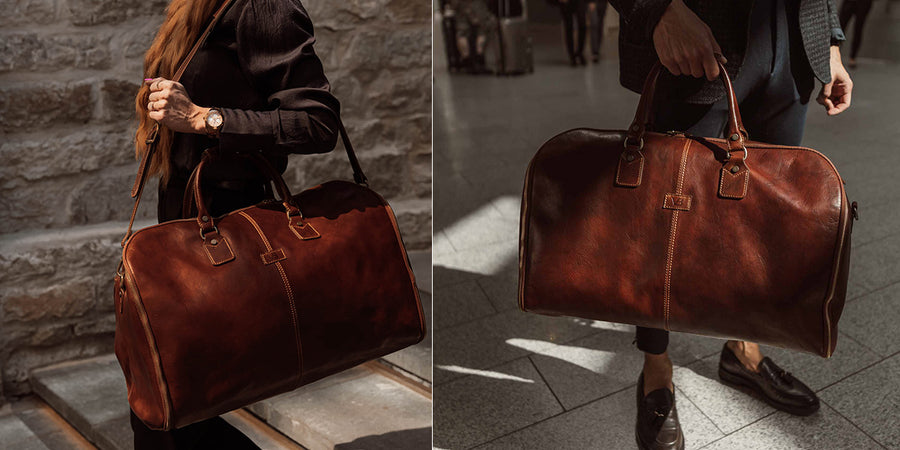
If you walk, take the train or subway, or bike in and can only carry one thing, one hybrid bag is the answer, and your job is picking which compromises you can live with.
If you drive to a gym near the office and change there, two bags almost always beat one, because you leave the work bag in the car and carry only what you need inside. Liters and the number of pockets barely matter.
You're carrying three separate loads, and what keeps one of them safe is bad for the next:
- A laptop and documents. They have to stay flat, protected and dry.
- A suit or shirt. It has to arrive without a crease pressed into it.
- Gym clothes and shoes. They come home damp, sometimes wet, and smelling of the session.
No single pocket works for all three. A space sealed tight enough for damp shoes is the last place you want a fresh shirt. The structure that protects a laptop is the opposite of the softness that lets a bag flatten into a locker.
On foot or on a train, you feel weight and bulk more than anything, so the lighter one-bag setup wins. On a bike you also need your hands free. In a car you never feel the weight, so two purpose-built bags win.
How Do You Keep Damp Gym Gear and Shoes Off a Clean Shirt?

You seal the wet gear away from everything else, and you let the shoes breathe. Most of the rest is decoration:
- A lined wet/dry compartment, ideally waterproof. It keeps damp clothes and a wet towel away from everything else.
- A separate, ventilated shoe pocket. Shoes are where the smell and the grit collect.
Both matter more for you than for someone heading straight to a car after a workout. Your gym gear sits next to a pressed shirt and a laptop for 8 or 9 hours, not 20 minutes.
Over that many hours, a sealed, unventilated pocket holds damp air against everything it touches, so shoes and clothes stew instead of drying.
A ventilated shoe pocket lets that air move. A waterproof lining keeps the water inside the wet/dry compartment, where it can't reach your shirt.
Watch for the versions that only look the part. A wet/dry compartment that is really just a second zipper into the same main space keeps nothing apart. A shoe pocket with no mesh or vents is a sealed box that holds the smell in.
Bags built for a work-and-gym day put a lining and a drain in the wet/dry compartment, and vents in the shoe pocket. You can see the ones set up for it here.
If you can only get one of the two, take the wet/dry compartment over the shoe pocket. A plastic bag for your shoes is an easy fix; a smell soaked into your shirt for the afternoon is something you carry until you get home.
What Stops a Suit from Creasing on the Way In?

No amount of padding stops a crease. A crease sets when you bend the cloth past the point it springs back from, so what matters is the shape the jacket is held in.
Fold a wool jacket hard at a sharp edge and the fibers give way along that line and hold the mark.
Let the same jacket bend in a wide, gentle curve and the fibers never pass that point, so the cloth falls flat again when you take it out.
So the fold-in-half suit compartment is out. On many commuter bags a flap folds the jacket once across the middle, and brands sell that as suit protection. That flap puts a hard bend right at the fold, which is what sets a crease.
What works is keeping the jacket at full length, or getting it onto a hanger fast:
- A true fold-flat garment section. It holds the jacket at full length, so nothing folds across the middle.
- The habit of hanging it up as soon as you arrive. Carry the suit however you like on the way. Then 15 minutes in a steamy bathroom lets gravity and the moisture pull the travel marks out.
- A garment duffel, the one bag built for exactly this. The suit hangs on a clip-in hanger inside, and when you zip the bag closed the jacket curves gently around the inside instead of bending at a hard line, so it arrives ready to wear.
If a crease-free suit in one bag is the part you can't compromise on, look for a bag that hangs the suit and lets it curve. The Grand, our garment duffel, does exactly that. We go through the options here.
The best fix of all, if your office allows it: keep a spare suit or jacket at work and carry only a shirt and your gym clothes.
Do that and the bag never has to protect a full suit, and the hardest of your three loads is simply gone.
Leather or Ballistic Nylon for a Bag That Does Both?

Neither material wins outright. If you mostly walk into meetings and rarely get caught in the rain, full-grain leather is the right call.
If you bike in through every kind of weather, or your gym clothes come home wet most days, go for ballistic nylon or leather-trimmed nylon.
| Material | Look with a suit | Rain and a wet gym floor | Over time |
|---|---|---|---|
| Full-grain leather | Tailored | Water-sensitive. It darkens and can spot in heavy rain, and you wipe it down and let it dry rather than leaving it to soak. | Looks better the more you carry it |
| Ballistic nylon | More technical than tailored | Rain runs off it, and it wipes clean after a gym floor | It just wears out |
| Leather-trimmed nylon | Enough leather that it doesn't look like sports gear | A tough body for the weather and the gym | Still looks right years later, because it takes the water and the wear you put it through every day |
Nylon also weighs less than leather. Past that, it comes down to how the bag looks and how it handles water:
- The look test. Does it belong walking into a meeting, or does it look like a gym bag the moment a colleague glances at it?
- The weather test. Does it take rain on the bike rack and a wet gym floor twice a day without you having to baby it?
Buy for whichever test your bag fails more often.
Structured for the Boardroom, or Soft for the Locker?

Structured or soft really is either-or. A shell either holds a firm, sharp shape or it squeezes down flat, and no bag does both.
Structured. It holds its shape when it's full, protects a laptop between its panels, and sits upright when you set it down by a desk, which is the look you want walking into a meeting.
It won't collapse into a gym locker, though, and it takes up the same space whether it's packed or empty.
Soft. A duffel flattens into a locker or a drawer once you're at your desk, and takes the shape of whatever you pack. But it slumps and tips when it's full, and it looks more casual.
Pick structured or soft for your normal day, because you live with the normal day far more than the exception. And if looking right next to a suit is the deciding factor, we go through the bags that manage it here.
Shoulder Strap or Backpack for the Walk In?
A shoulder strap is fine over a short distance. But load a bag with clothes, shoes and a laptop, walk 20 or 30 minutes with it, and the strap digs into one shoulder until you start swapping sides to give that shoulder a break.
A backpack solves that. It spreads the weight across both shoulders and frees your hands for a phone or a ticket. But it presses a warm, damp back panel against the exact part of your jacket you most want to keep dry and crease-free.
So if you bike or walk far, backpack straps are usually the better trade-off, though you want a firm back panel and a little clearance so the bag isn't sitting flush against the jacket the whole way.
For a short walk, a strong grab handle and a removable shoulder strap keep things simpler and keep the bag off your back.
And whatever you carry it with, a padded sleeve that actually fits your laptop, 13 to 16 inches (33 to 41 cm), protects it better than the bag around it does.
Used Twice a Day: What Wears Out First?

Used twice a day, the zipper wears out long before the material does, on most bags by years. The zipper and the moving hardware take the wear every time you open and close the bag, while the leather or fabric just sits there.
What actually predicts a long life is the hardware, the stitching and the base:
- A smooth, solid zipper that can be repaired or replaced rather than glued in.
- Tight stitching where the handles and straps anchor into the body (a full bag pulls hardest there).
- A bag that stands on its own when you fill it and set it down. The base and the frame hold their shape.
Two things that look like quality aren't. Heavy doesn't mean tough: weight usually just means more material or bulkier hardware, and you're the one hauling it every day.
And a long list of pockets works against you as often as for you, because every extra pocket is another zipper and seam that can fail. A simple bag with one excellent zipper normally outlasts a complicated one with five ordinary ones.
Suit-and-Gym Commuter Bags: Quick Answers

Can one bag carry a suit, a laptop and gym clothes?
Yes, if it keeps the gym clothes in a lined, vented wet/dry compartment and protects the suit by hanging it or holding it flat at full length.
Get both and carrying one bag is realistic. If a bag does either job badly, take two bags instead. You'll resent the compromise far less.
Is a garment duffel overkill for a daily commute?
Only if you don't carry a full suit every day. Carry one daily, and a duffel that hangs the suit and lets it curve is the right choice.
If you keep a suit at the office and move only a shirt and gym clothes, a simpler duffel with a wet/dry compartment is all you need.
How big does it need to be?
Big enough for a shirt, a pair of shoes and one session's clothes, and no bigger.
Oversizing is the usual mistake: a larger bag adds weight and bulk against your side on every walk, and you end up filling the spare space with things you don't need.
How can I judge crease and damp protection before I buy?
Before it's in your hands you're judging from what the brand shows, so look for a true hanging or fold-flat garment section and a lined, waterproof wet/dry compartment in the photos and the spec.
You can't fully test either until you're packing it, so treat the return window as the real test.
In the first day or two, pack it the way you actually will, and if the wet/dry compartment leaks into the main space or the suit comes out marked, send it back.
So take the picks above and check them against the week you actually have. And if a crease-free suit is the part you can't give up, our garment duffel collection is the place to start. You can browse it here.









Your email address will not be published.