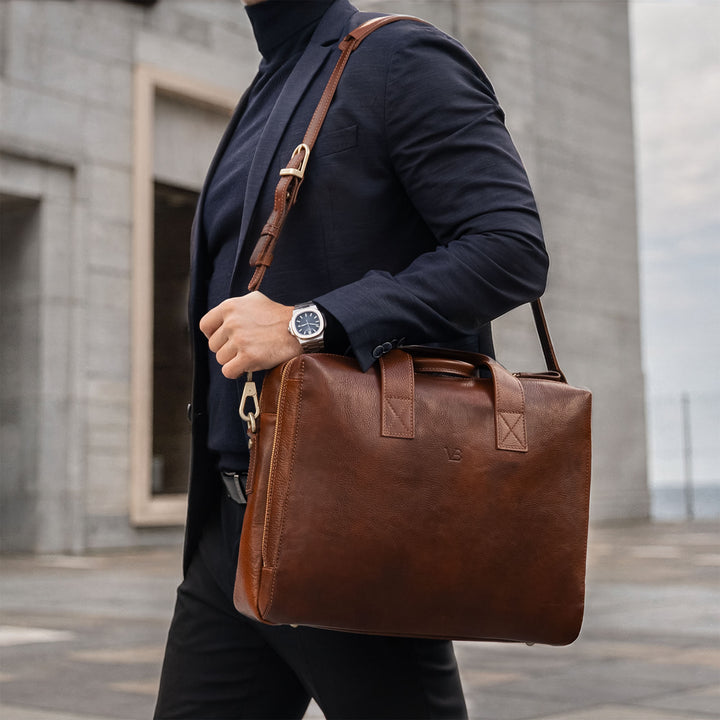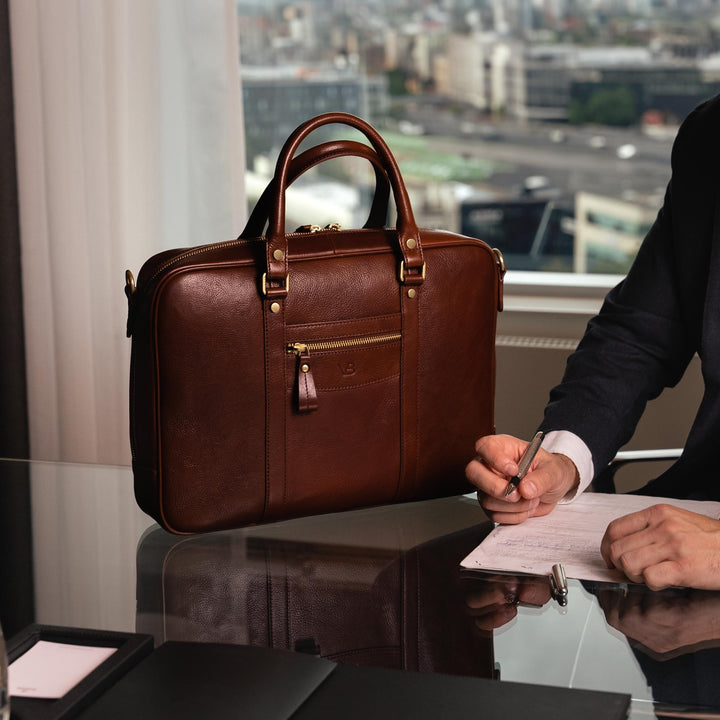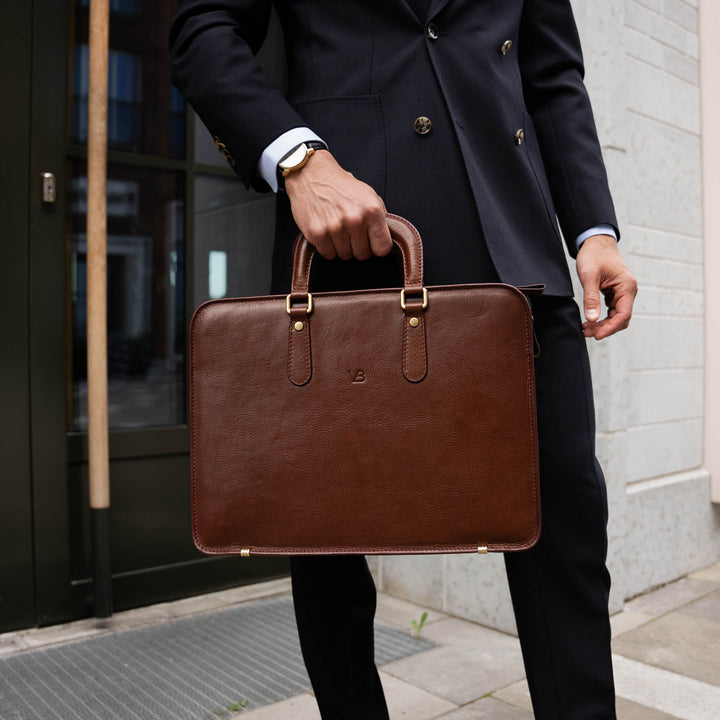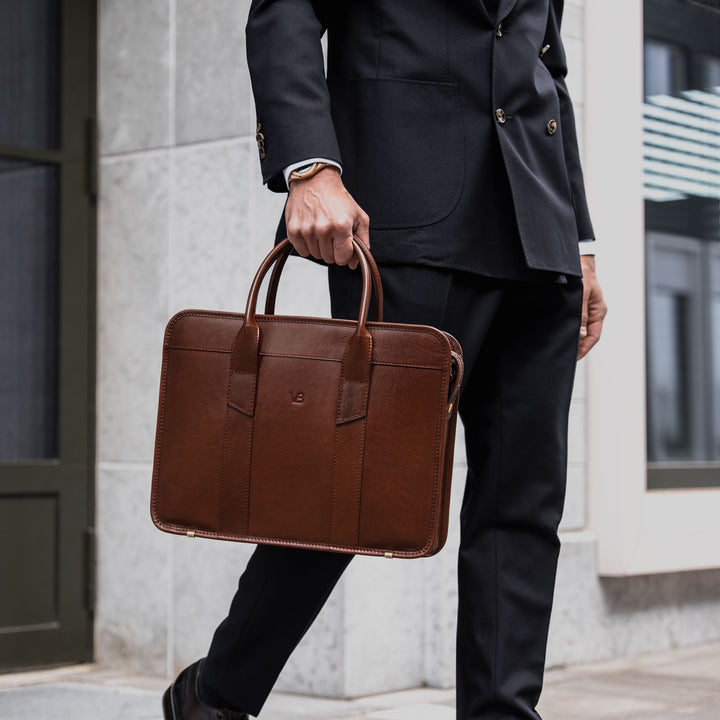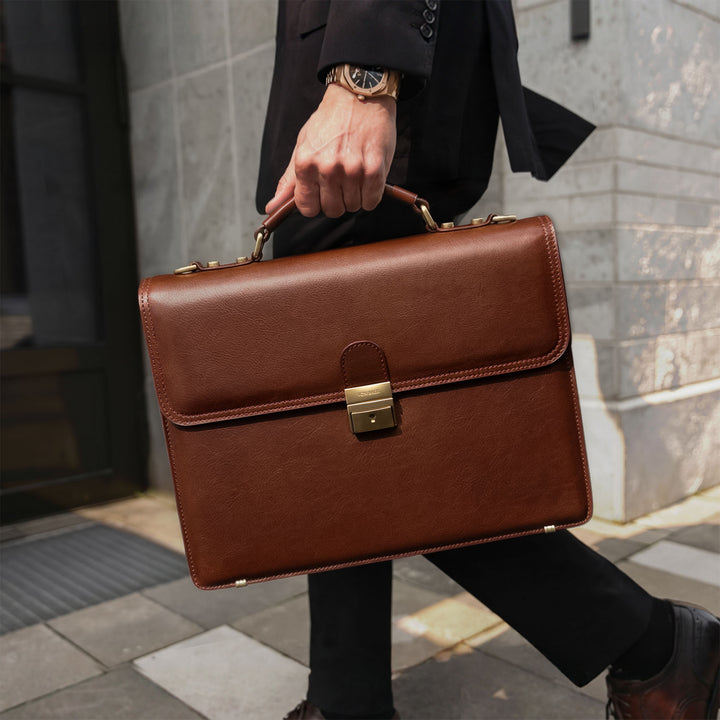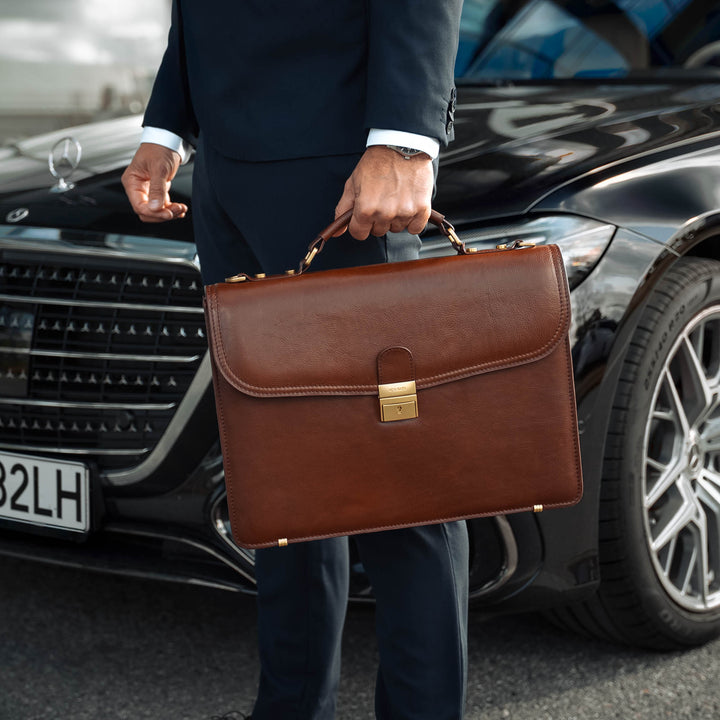
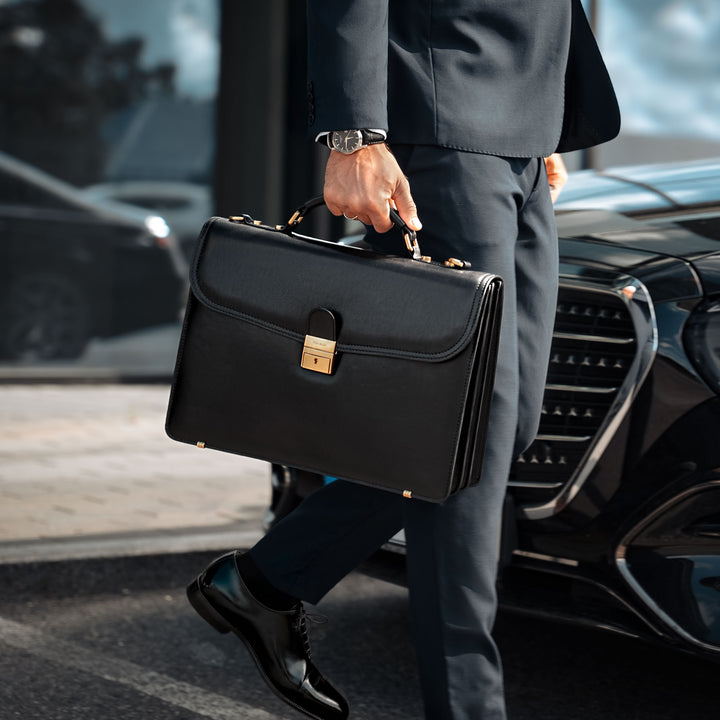
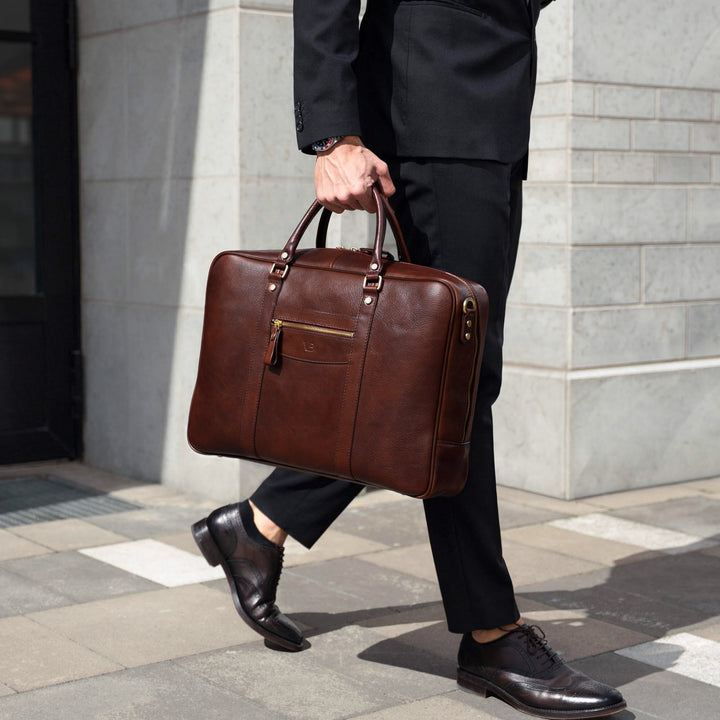
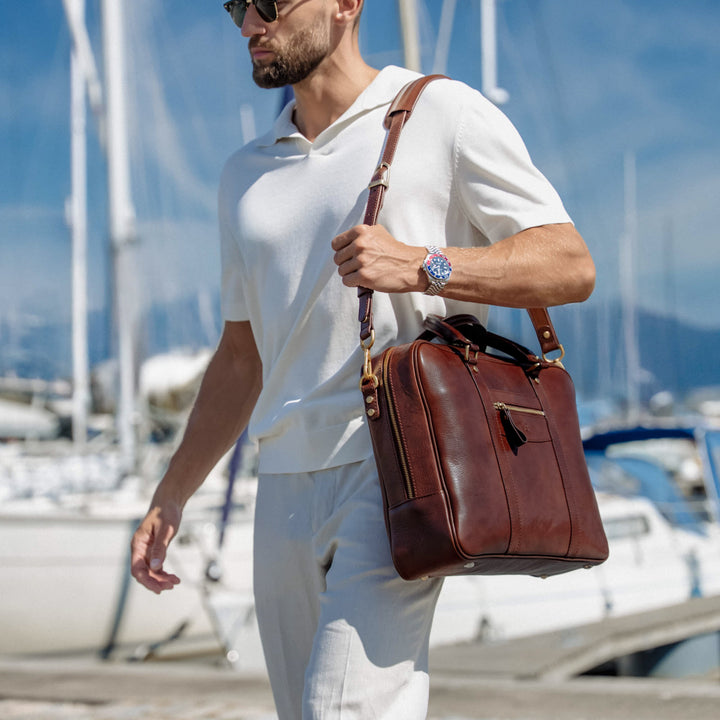
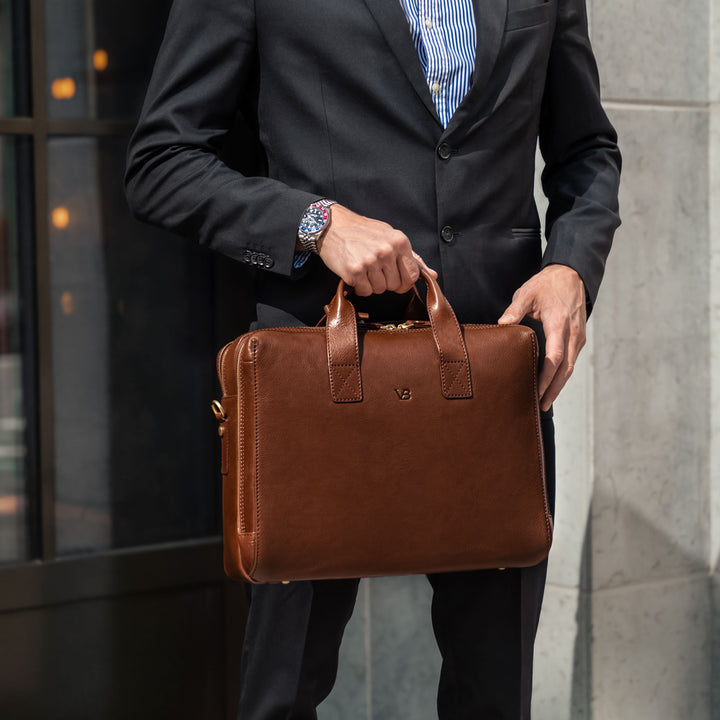
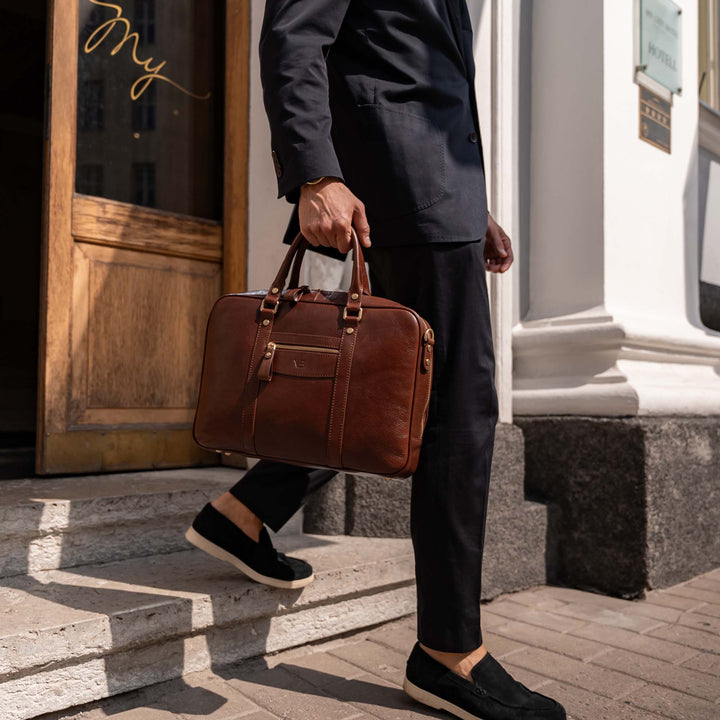
Luxury laptop briefcases for men, handmade from A-grade full-grain leather.
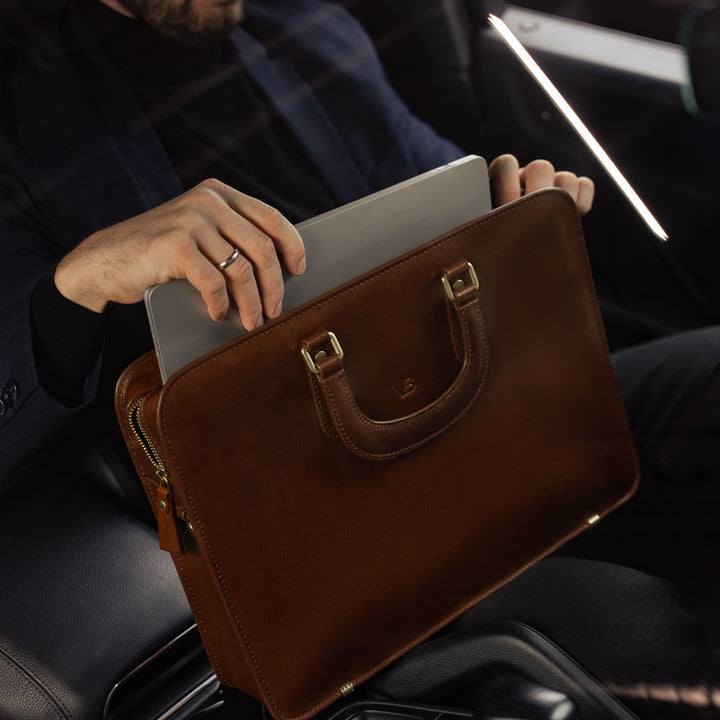
Professional cases with a dedicated 15-inch or 17-inch laptop compartment, ideal for work.


Buyer's Guide
The first thing people notice when you enter a room isn’t your watch, suit, or shoes - it’s what you carry. A flimsy, overstuffed bag signals disorder, while a refined, structured case instantly establishes credibility . It’s more than an accessory; it’s an extension of your precision, discipline, and success .
A laptop case isn’t just about function - it’s about the unspoken message it conveys. Are you the person who settles for "good enough," or do you demand excellence in every detail?
The difference is felt the moment you set it down: a well-built case holds its shape, maintains a structured profile, and - most importantly - never betrays your professionalism with frayed edges, slumping leather, or cheap zippers.
Ideal Dimensions for Balance and Function:
A case might look impressive on a display shelf, but how will it hold up after years of use? The answer lies in the leather itself.
Cheap materials degrade, peel, and lose their structure. High-quality full-grain vegetable-tanned leather, on the other hand, develops a rich patina , softens where it should, and holds firm where it needs to - which is why we use it in all Von Baer briefcases.
Think of it like a well-aged whiskey - cheap alternatives deteriorate quickly, while full-grain leather develops more character over time.
Press a fingernail into the leather. If it leaves a light mark that slowly fades back, it’s high quality - meaning the fibres are dense enough to “self-heal” minor scratches. If it stays indented or flakes, you’re looking at lower-grade material.
It’s easy to overlook the difference until you see it firsthand. A few years ago, an ex colleague pulled out a briefcase that had seen daily use for over a decade - rich, coffee-coloured leather, softened handles shaped by years of grip, and a patina that made it look even more impressive than when it was new. The case still held its structure, with no sagging or peeling edges. The next morning, a junior associate set down his own bag beside it - a department store purchase, barely a year old. The surface had already begun to crack near the seams, the once-smooth black coating wearing off to reveal a cheap, fibrous core beneath. The contrast was stark. One was built to endure. The other was a disposable item, aging poorly despite costing several hundred dollars.
Ever had a bag where the zipper failed at the worst possible moment? Weak hardware is a dealbreaker. Even the best leather is useless if the components fall apart .
Pick up the case and tilt it. If the hardware clinks softly and has weight , you’re holding solid brass or steel. If it feels hollow or sounds tinny, expect future issues.
A broken clasp in the middle of a business trip? Not an option. Hardware should be effortless, reliable, and practically indestructible.
At a conference in Chicago, a colleague reached into his briefcase to pull out a printed proposal - only to have the zipper snag and refuse to budge. He yanked harder, and it split open entirely, leaving him fumbling with loose papers in front of the entire room. Across the table, the VP he was meeting with unzipped his own case with a single smooth motion, retrieving a pristine, well-organised set of documents. No struggle, no awkward delay. You could see the moment his credibility took a hit - not because of his work, but because of a faulty, cheap component that failed when he needed it most. That’s the kind of small detail that makes an impression, whether you realize it or not.
Some bags turn into black holes where pens, cables, and documents vanish into chaos. An intelligent layout eliminates daily friction .
Organisation isn’t about the number of pockets—it’s about precision placement that eliminates wasted space and frustration.
| Price Range | Material & Build | Expected Lifespan |
|---|---|---|
| $1,500+ | Full-grain leather, hand-stitched, premium hardware | 20+ years |
| $500-$1,000 | Top-grain leather, machine-stitched, solid hardware | 10-15 years |
| $200-$500 | Genuine leather, factory stitching, mixed hardware | 5-10 years |
| < $200 | Bonded leather, glued seams, weak components | 1-3 years |
It’s easy to assume higher prices are just for branding. In reality, the gap in quality is staggering.