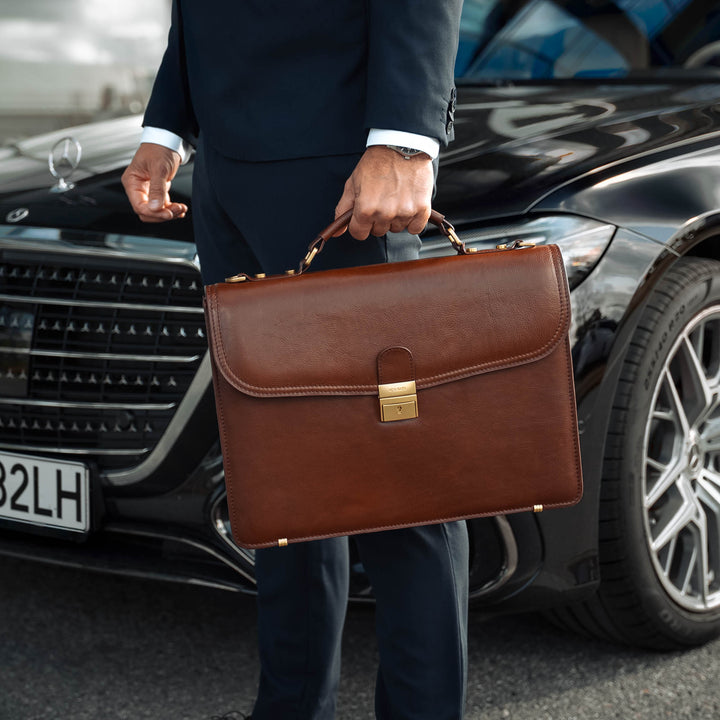
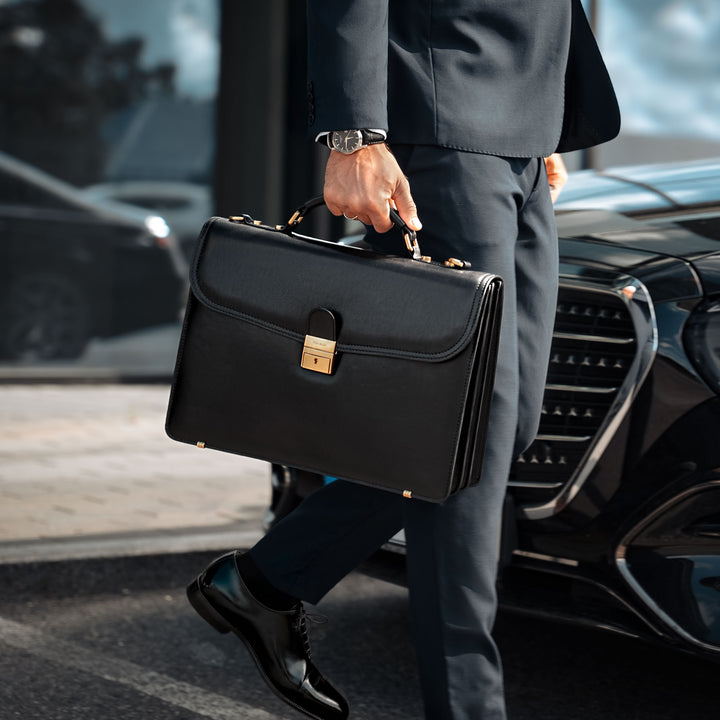
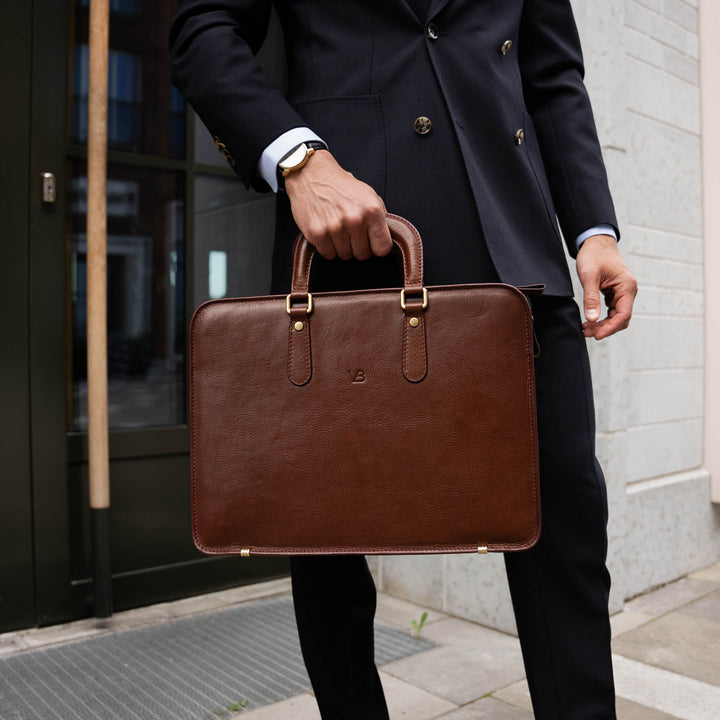
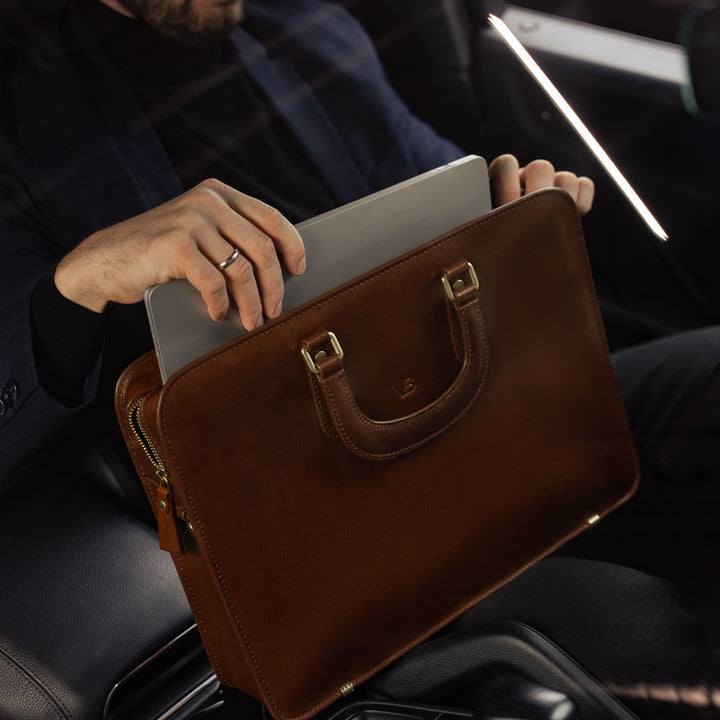
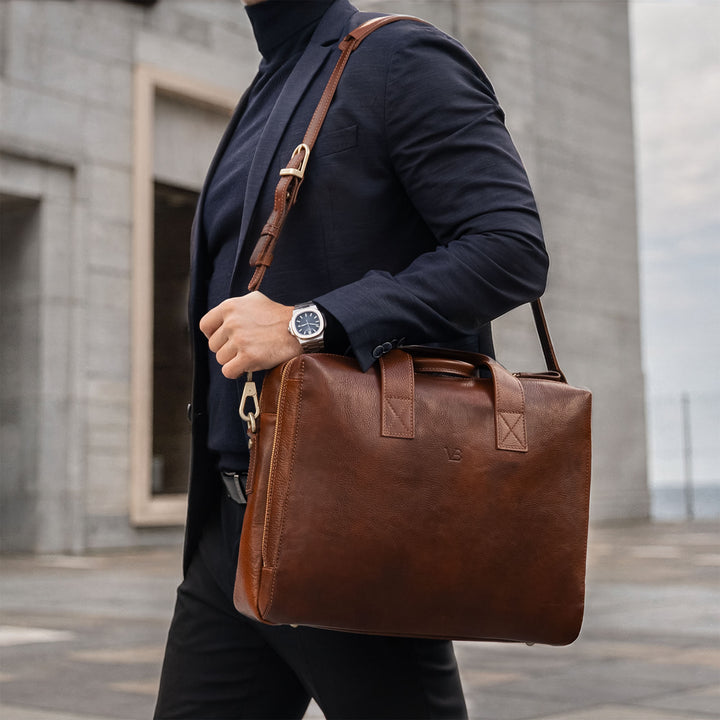
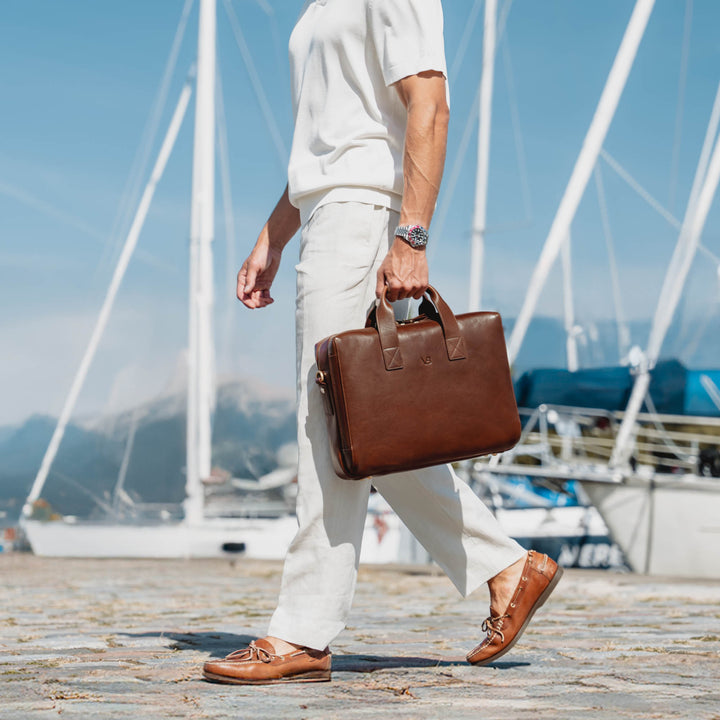
Professional briefcases for attorneys attending trial who need to convey power and confidence.
Made from the highest grade full-grain vegetable-tanned Italian leather.
Minimalist branding. Personalisable with a subtle embossed luggage tag.


Buyer's Guide
At this stage in your career, the details aren’t minor - they’re defining.
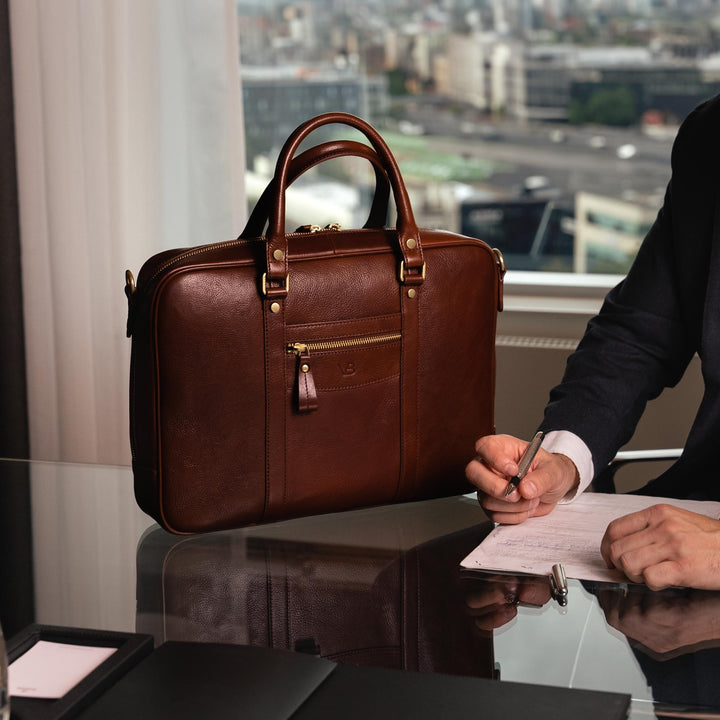
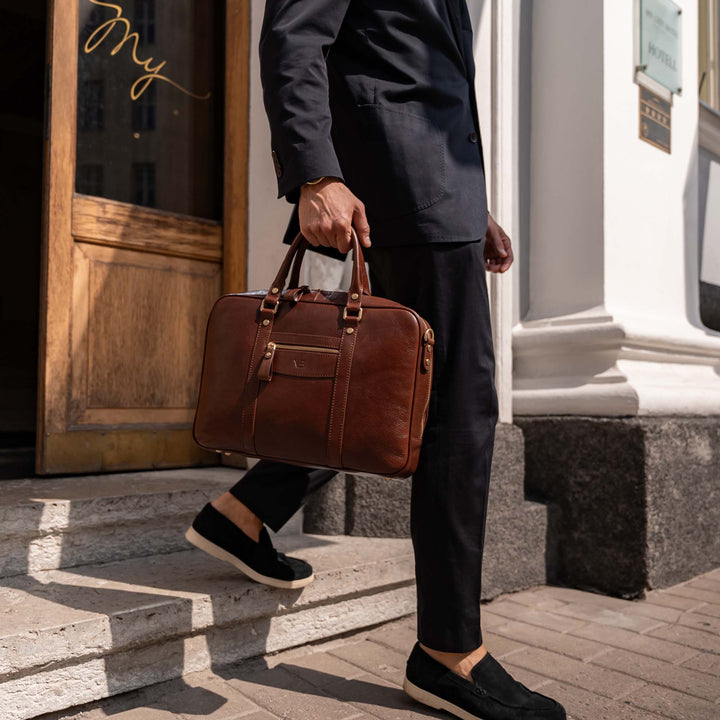
The briefcase you carry isn’t just holding legal documents and a laptop; it’s signaling your level of preparedness, professionalism, and long-term ambition.
A structured, well-crafted case reinforces the image of control, capability, and meticulous attention to detail - the same qualities that win cases.
A flimsy, collapsing satchel does the opposite. Papers bend, corners fray, and rummaging for a pen mid-meeting wastes precious seconds. Ever had to awkwardly shove a file back into a bag while maintaining eye contact with a senior partner? These small frictions add up.
Beyond appearance, the wrong bag actively hinders your work . Poor organisation forces you to scramble through crammed folders while opposing counsel sits with a neatly arranged docket. Cheap materials wear down quickly, leading to cracked handles, stretched seams, and an unfortunate replacement cycle.
What’s at stake? Time, efficiency, and - most importantly - how you're perceived.
Precision is everything in your profession - your tools should match that level of scrutiny.
A well-constructed case needs to meet specific, real-world demands.
A good litigator doesn’t walk into a deposition with loose files haphazardly stuffed into an oversised tote. But a truly well-designed case doesn’t just look neat - it enables efficiency in ways most people overlook.
Rigid Structure That Holds Its Shape
A collapsing case creates physical friction - pulling documents from a slouching mess wastes seconds in high-stakes moments. Internal framing and reinforced edges ensure your bag stays upright, even when partially full, preventing the dreaded “puddle” look that plagues softer bags. Look for cases with reinforced aluminum or structured leather panels for shape retention. A thickness of at least 3mm full-grain leather helps maintain structure over years of use.
Deliberate, Thoughtful Organisation
Ever seen a partner walk into a meeting and, without looking, pull out the exact document they need? That’s the level of instinctive organisation your bag should enable.
Materials That Improve With Age
Cheap leather looks good in the store but cracks, peels, and warps in months. Full-grain leather, on the other hand, softens and develops a deeper patina, meaning the bag actually looks better after years of wear . Leather thickness should be at least 2.5mm for durability.
Picture this scenario:Two summers ago, at a federal courthouse in Washington, D.C., an associate sat across from opposing counsel, waiting for the judge to enter. His bag, a mass-market synthetic briefcase, sagged open on the table, documents sliding toward the edge. Every few minutes, he had to nudge them back in. Across from him, the lead partner for the opposition had an old, structured leather case - corners scuffed but intact, shape holding firm. When he reached for his notes, they were exactly where he expected them, no adjustment needed. As the case progressed, the small difference in organisation became more obvious. One attorney remained composed, the other subtly distracted by his own equipment. When you spend years honing your arguments, the last thing you want is your bag working against you.
If your daily tools aren’t working for you, they’re working against you.
Leather can be deceiving. Many people assume that because something is labeled "leather," it’s automatically premium. But in reality, there’s a wide quality spectrum , and manufacturers capitalize on confusion.
Full-Grain Vegetable-Tanned Italian Leather (Best Choice) - Which is Why We Use it at Von Baer
Top-Grain Leather (Second-Tier Choice)
Genuine Leather (Misleading Term)
Hidden durability markers: Check for hand-stitched seams with waxed thread , which should be at least 1mm thick for superior hold. Solid brass hardware should weigh at least 50 grams per buckle or clasp to ensure longevity.
At an annual firm retreat in Chicago, a junior attorney was pulling his briefcase strap over his shoulder when the synthetic leather gave way with a sudden snap. The seam had split where the handle met the bag - less than a year old, and it had already failed under the weight of a few case files and a laptop. He muttered something under his breath and resorted to carrying it under his arm the rest of the day, making mental notes to replace it before Monday. Later that evening, he ran into a former colleague - now in-house at a Fortune 500 company - who carried the same bag he had five years ago. The difference? The full-grain leather had deepened into a rich mahogany, the stitching still tight, the handle molded to years of use. It had been an investment at the time, but one that paid off every single day since. Cheap leather doesn’t just fail. It makes you rebuy.
Think of it like a well-crafted argument - real strength comes from the foundation, not surface-level polish.
The balance between sleek design and practical storage is where most professionals make mistakes. Too small, and you’re cramming folders at odd angles. Too large, and you’re carrying dead weight —litreally and visually.
While no bag can guarantee total security, smart design minimizes risks.
Imagine is the opposing counsel accidentally left privileged case notes behind at a coffee shop - that's an expensive and career-damaging mistake.
If you wouldn’t leave a confidential deposition transcript in plain sight, why carry it in a bag with no safeguards?


