
Suitcase Vs Carry On Bag For Business Travel

Business travel breaks down into a simple trade-off:
Speed vs capacity.
- A carry-on bag keeps you moving fast and eliminates baggage claim delays.
- A checked suitcase gives you far more packing volume but adds time, risk, and logistical friction.
If your schedule is tight and you need control over your arrival timeline, carry-on luggage wins almost every time.
If your trip demands multiple outfits, shoes, or bulky gear, a checked suitcase becomes unavoidable.
If you only need a carry-on but also want to take a suit, then a garment duffel bag is best.
Carry-On Bags vs Suitcase: At a Glance
| Category | Carry-On Bag | Garment Duffel Bag | Checked Suitcase |
|---|---|---|---|
| Typical Capacity | 35–45L | 20–30L usable | 65–120L |
| Suit Handling | Folded | Hangs / minimal folding | Loose packing |
| Airport Exit Time | 10–15 min | 10–15 min | 30–60+ min |
| Best For | 3–5 day no-suit business trips | 1–2 suit short trips | 5+ day travel |
Which is Best For Airport Efficiency?
Carry-On Bag

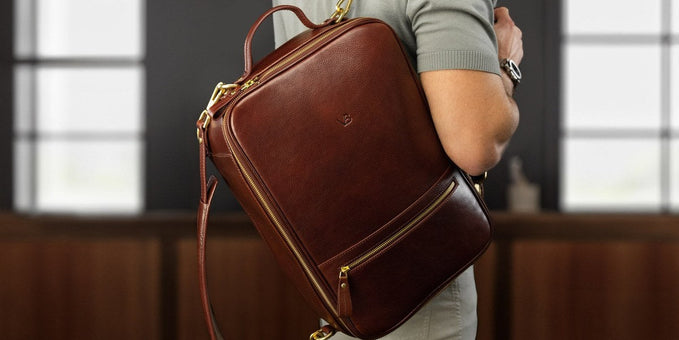
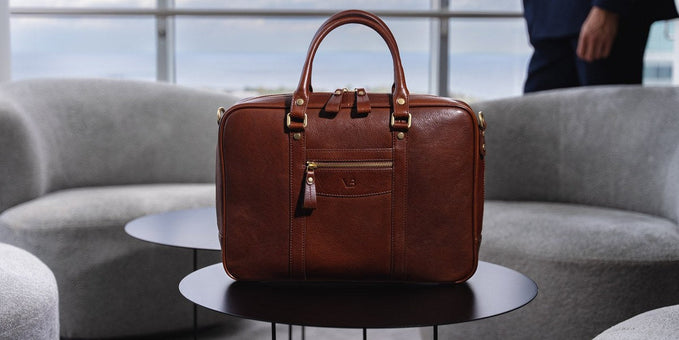
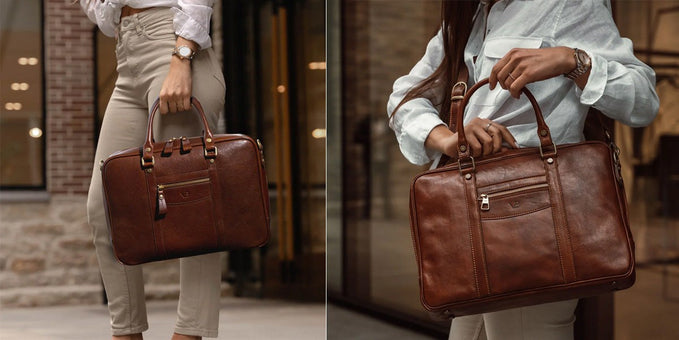
Images: Voyager Carry On and Exquisite Briefcase
A carry-on bag eliminates the baggage system entirely. No bag drop, no baggage claim, and no risk of a delayed suitcase.
In most major airports, that translates to exiting the terminal 20–40 minutes faster. Frequent travelers often get from aircraft door to rideshare pickup in under 15 minutes when traveling with only cabin luggage.
For consultants, executives, and sales professionals moving between meetings, this time advantage compounds quickly.
This is true of a garment duffel bag too, which counts as a carry on, but lets you carry your suit without it creasing (learn more here).
Winner: Carry-On Bag - Eliminating baggage claim removes the single largest delay in airport travel.
Checked Suitcase

Checked luggage adds three operational steps:
- bag drop before security
- baggage handling during transit
- baggage claim after landing
At large airports, baggage claim waits typically run 20–40 minutes, sometimes exceeding 50 minutes during peak arrival periods.
Even when the suitcase arrives on time, the delay introduces schedule uncertainty.
Verdict: Necessary only when capacity requirements exceed carry-on limits.
Which is Best For Packing Capacity?
Carry-On Bag

A standard carry-on bag provides about 35–45 liters of packing volume.
Typical business travel packing within that limit looks like:
- 1 suit (7–8 L)
- 3–4 dress shirts (3–4 L)
- 1 pair of dress shoes (4–5 L)
- casual clothing (10–12 L)
- toiletries and accessories (4–5 L)
- laptop and electronics (3–4 L)
This comfortably supports 3–5 day trips when packing efficiently.
Remember that your suits are far better stored in a dedicated garment bag to avoid creasing. Don't want two bags? That's when you want a garment duffel bag as your carry-on (we compare them both here).
Winner for short trips: Carry-On Bag - Efficient for typical professional travel without unnecessary bulk.
Checked Suitcase
Checked suitcases typically offer 65–120 liters of capacity - easily double or triple the volume of carry-on luggage.
This becomes necessary when travel requires:
- multiple suits
- extra shoes
- outerwear
- conference materials
- longer trip wardrobes
Winner for long trips: Checked Suitcase - Larger volume solves packing constraints that carry-ons cannot handle.
Which is Best For Traveling With a Suit?

Carry-On Bag
A standard carry-on bag requires folding suits to fit inside the main compartment. Even when using proper packing techniques, pressure from other items can affect:
- shoulder structure
- lapel roll
- sleeve creases
The inside-out jacket fold reduces this risk, and most wrinkles relax after hanging garments for 10–15 minutes at the hotel.
However, if your meeting begins soon after landing, that recovery time may not exist.
Verdict: Works for most trips but not ideal when presentation quality must be perfect immediately after arrival.
Garment Duffel / Garment Carry-On

A garment duffel combines a traditional garment bag with duffel-style storage. Suits hang or fold minimally inside a dedicated panel, protecting the areas most prone to wrinkling:
- shoulders
- lapels
- chest structure
Most garment duffels provide 20–30 liters of usable space once suits are packed. That is enough capacity for:
- 1–2 suits
- 2–3 shirts
- basic toiletries
- small accessories
Because the bag still qualifies as cabin luggage, you avoid baggage claim delays while maintaining better garment presentation.
Winner for short formal trips: Garment Duffel - It preserves suit structure while keeping everything in the cabin. The best one? Check out the Grand.
Checked Suitcase

A checked suitcase provides enough space to pack suits with minimal compression or inside garment folders. This reduces wrinkle pressure compared to tightly packed carry-ons.
However, the trade-off is losing control of the bag during transit. Delays or misrouted luggage can leave you without business attire when you need it.
Verdict: Provides the best packing space but introduces travel risk and baggage claim delays.
Pro Tip: Most garment duffel bags fold to roughly 22 inches, allowing them to fit in overhead bins on Airbus A320 and Boeing 737 aircraft. This gives you suit protection without the delay risk of checked luggage.
(Learn more about the best ways to pack a suit into your carry-on here).
Which is Best For Risk and Reliability?
Carry-On Bag
When luggage stays in the cabin, you eliminate:
- lost luggage
- misrouted baggage
- delayed clothing or presentation materials
For high-stakes meetings, keeping essential items with you removes a major operational risk.
Winner: Carry-On Bag - Maximum control over critical belongings.
Checked Suitcase
Most airline baggage issues are delays rather than permanent losses, but even a 12-hour delay can disrupt business schedules.
If clothing or presentation materials are required immediately after arrival, checked luggage becomes a liability.
Verdict: Acceptable only when contents are non-critical or replaceable.
Who Should Buy What
The correct luggage choice depends primarily on trip duration and packing complexity.
The Frequent Business Traveler
If you take short trips frequently - client meetings, consulting engagements, conferences - choose a carry-on bag. Speed and reliability matter more than extra packing space.
The Multi-Day Consultant
For trips lasting 3–5 days with mixed clothing, a structured carry-on still works well. Efficient packing and laundry access extend trip length without checking luggage.
The Long-Duration Traveler
If the trip exceeds 5–7 days or requires multiple suits and shoes, use a checked suitcase. The additional capacity prevents aggressive packing and wardrobe limitations.
The Equipment Carrier
If you transport bulky items - product samples, demo gear, conference materials - checked luggage becomes the practical solution.
How to Decide in 10 Seconds
- If the trip is under 4 days, choose a carry-on.
- If you need multiple suits or heavy gear, check a suitcase.
- If you have a meeting shortly after landing, keep everything in carry-on luggage.
- If your itinerary includes multiple cities, avoid checked luggage whenever possible.
Learn more about the evolving definition of modern business travel here.
Final Verdict
If you value speed, reliability, and control, travel with a carry-on bag. It eliminates delays and keeps critical items with you throughout the trip.
If your trip requires significantly more clothing or equipment, a checked suitcase becomes necessary despite the added time and risk.
For most professionals taking short business trips, the decision is simple:
Use a carry-on bag whenever possible. Check a suitcase only when capacity forces the issue.
If you're still not sure about the exact differences, we compare carry-ons and personal items here.
We also compared garment duffel bags with checked luggage here.

Author: Igor Monte
Igor Monte is the co-founder of Von Baer. He's an expert in all things premium leather, from being an end-user right up to the design and manufacturing process. His inside knowledge will help you choose the best leather product for you.
We strive for the highest editorial standards, and to only publish accurate information on our website.
Related Articles



Leave a Comment
Your email address will not be published.